They Thought India Would Commit Suicide

They Thought India Would Commit Suicide
They Thought India Would Commit Suicide
What the British and some Indians really believed about India’s future before Independence
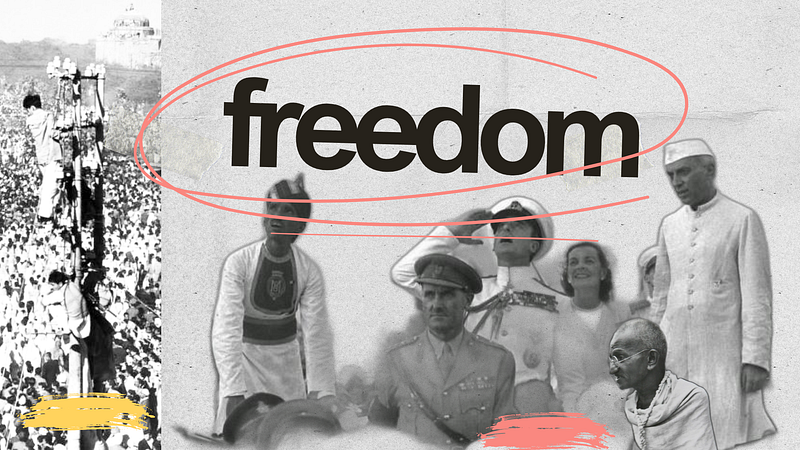
Can we be completely wrong about someone — not just a person, but a whole country?
I was thinking about this while reading about India in the 1940s.
Could the world really be so wrong about a country that now seems like it has always been strong and united?
Before independence, India was very different from today.
It was not a single, united country.
It was made up of many cultures, languages, religions, kingdoms, and princely states.
Keeping all of this together under one flag seemed almost impossible. Many people believed that India could never become a single nation — or the world’s largest democracy.
Some of the most powerful people of that time openly shared their doubts. Looking back now, their words seem shocking, but they show how uncertain that time was.
British Doubts
John Strachey (British civil servant, 1880s)
“Under self-government, India would commit suicide; but our politicians would be guilty of murder as associates in the crime.”
I had to read that twice. Could someone really say this about a whole nation? Strachey thought India could never rule itself.
John Strachey (again, 1880s, in India: Its Administration and Progress)
“There is not, and never was an India… no Indian nation, no people of India.”
He said India was just a map, impossible to unite politically.
Winston Churchill (British PM, 1940s)
“India is merely a geographical expression. It is no more a single country than the Equator.”
Churchill believed that once the British left, India would fall apart.
Sir John Seeley (British historian, 1883)
“India is a name which we give to a great region including a multitude of different countries.”
W.H. Morris-Jones (British political scientist, 1947)
“Parliamentary democracy in India is like a lottery.”
He thought democracy would fail quickly in a poor, diverse country.
Clement Attlee (British PM who gave independence, 1947, private remarks)
He doubted that India could survive as a united and democratic country without the British.
Pause for a moment and think: these were some of the most important people in the world — and they doubted India’s future.
Indian Doubts
It was not only the British who worried about India. Some Indians also feared that independence could bring trouble.
Sir Syed Ahmad Khan (Founder of Aligarh Movement, 19th c.)
“The day the English leave India, it will be divided into Hindu kingdoms and Muslim kingdoms.”
Even some Indians doubted themselves. Imagine fearing your own country would collapse as soon as the British left.
Some Princes & Rulers of Princely States
Many maharajas and nawabs said their states would collapse without the British.
The Nizam of Hyderabad thought British protection was needed to keep his kingdom safe.
Anglo-Indians & Business Elites
Some wealthy business people, especially those who worked with British companies, feared India could not survive economically without British guidance.
Moderate Leaders (early Congress phase, late 19th c.)
Leaders like Dadabhai Naoroji and Gopal Krishna Gokhale wanted slow reforms under British rule instead of full independence, because they thought India was not ready.
Gokhale said Indians must learn self-government step by step under British supervision.
B.R. Ambedkar (before 1947)
He warned that if the British left without protections for Dalits, upper-caste Hindus could dominate them.
Sometimes he suggested that the British presence was at least a check on social inequality.
Think about it: even some Indians, the leaders closest to the people, were not sure independence would work.
And yet, all these doubts were wrong. India survived Partition, poverty, and wars. Democracy stayed strong. Social movements grew, science advanced, and people of different religions and cultures lived together. Those who predicted “suicide” were completely wrong.
Isn’t it amazing? Even the smartest people can misjudge a nation’s spirit. India’s story shows us to never underestimate the courage, creativity, and determination of people who want to govern themselves.
So next time someone doubts a person, a group, or even a nation, remember: history is full of moments when the world thought disaster was certain — and it never came.
