The Cheapest Sleep Fix in the World - It Isn’t Melatonin.

The Cheapest Sleep Fix in the World - It Isn’t Melatonin.
The Cheapest Sleep Fix in the World - It Isn’t Melatonin.
The supplement industry makes money when your sleep stays broken
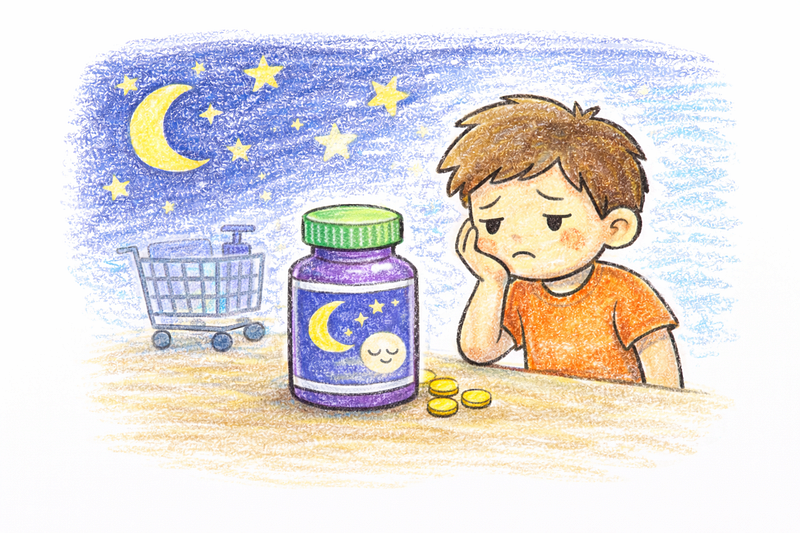
Every insomniac can relate to this moment.
11 PM.
Couldn’t sleep. Wide awake.
Staring at the ceiling like it owes you money. Our brain replays every memory and blaming us for every mistake we did.
At that exact moment , you do what everyone else is doing.
You open Amazon.
You search for “sleep supplement.”
You buy melatonin, take one, wait for magic, and fall asleep wondering why you’re dreaming about checkout pages.
And it works. Sort of. Sometimes. Until it doesn’t.
Then you buy the stronger one.
Then the gummies.
Then the spray.
Then the sleep tea, the sleep mask, the weighted blanket, the white noise machine.
And at some point you’ve spent more money trying to sleep than you spend on actual food.
But let me tell you , you’re actually wasting your money .
The fix was outside your window the whole time.
Not in a capsule. Not in a bottle. Not on Amazon.
And it costs absolutely nothing. Yes it’s nothing .
The Industry’s Dirty Little Secret
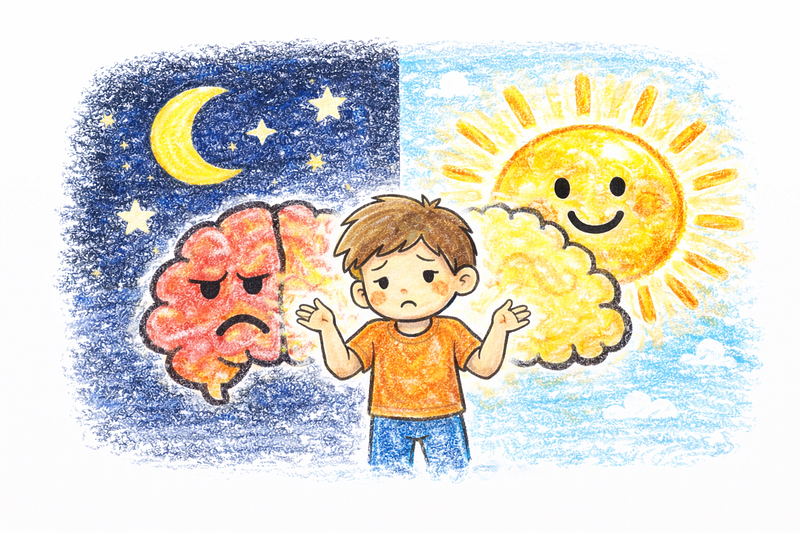
The global sleep supplement market is worth over $11 billion.
Melatonin alone is a $900 million industry in the US.
Growing every year.
Not because it works brilliantly .
but because your sleep stays broken.
Think about it this way:
If melatonin actually fixed sleep, people wouldn’t need to keep buying it.
That’s not conspiracy. That’s just business.
To be honest ,the industry doesn’t make money when you sleep well. It makes money when you almost sleep well, just enough to believe the next product might finally be the one.
Here’s what they doesn’t say:
Melatonin doesn’t fix your sleep.
It shifts your sleep timing. That’s it.
Melatonin actually designed for jet lag, when your body clock is confused about timezones.
But if you can’t sleep because your body never built enough sleep pressure during the day, melatonin won’t help and can’t help.
You’ll just lie there. Slightly drowsy. Still awake. Feeling cheated.
The problem was never the end of your day.
It was the beginning.
You Don’t Have a Sleep Problem. You Have a Light Problem.

Inside your brain is a tiny structure called the suprachiasmatic nucleus.
Think of it this way — Your body’s master clock. About the size of a grain of rice.
It runs on one thing above everything else.
Light.
Specifically — morning sunlight.
Every morning when light enters your eyes, your master clock resets. It starts a precise 12–16 hour countdown. At the end of that countdown, your body releases melatonin naturally, your temperature drops, and you fall asleep.
This system worked perfectly for 200,000 years of human existence.
Then we invented offices, phones, blackout curtains and broke it completely.
Your body isn’t broken. Your timing is.
The Science Nobody Is Selling You
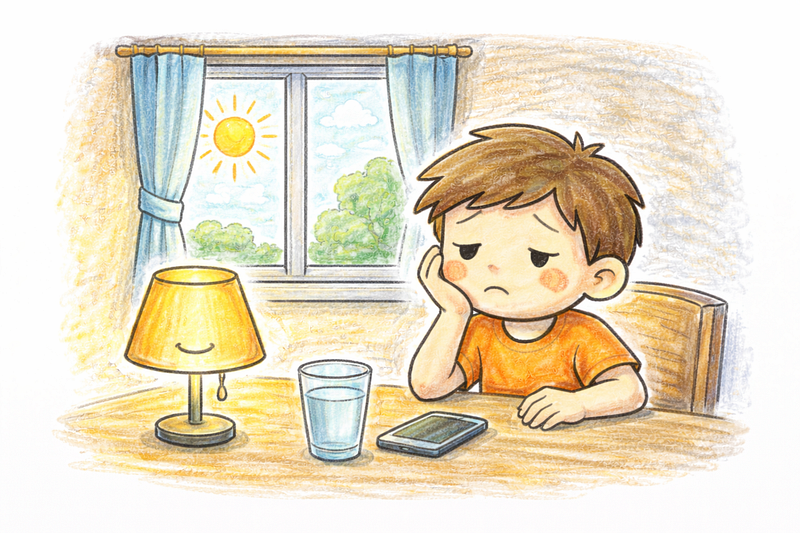
Here’s something that will make your indoor lighting feel like a cruel joke.
Indoor lighting typically measures 100–500 lux.
Morning sunlight exceeds 10,000 lux.
That’s not a small difference. That’s a different world entirely.
No wonder your body can’t tell if it’s morning or midnight. You’ve been feeding it candlelight and calling it sunrise.
In 2021, Stanford neuroscientist Dr. Andrew Huberman published research that changed how sleep scientists think about insomnia.
The finding was almost embarrassingly simple.
Getting bright light in your eyes within 30–60 minutes of waking — ideally direct morning sunlight — is the single most powerful thing you can do for your sleep at night.
Not what you take before bed.
What you do in the morning.
Here’s why it works:
Morning sunlight contains a specific ratio of blue and yellow light uniquely powerful at resetting your circadian rhythm. The angle of early morning sun means this ratio is at its strongest — only during the first 1–2 hours after sunrise.
This one light signal does three things simultaneously:
First — cortisol peaks at the right time. Morning cortisol is good. It gives you energy and alertness. When it peaks early, it falls properly by night — making sleep natural rather than forced.
Second — your melatonin timer starts counting. Get light at 7 AM, and your natural melatonin rises around 9–10 PM. Perfect timing. No pill required.
Third — your body temperature regulation begins. Your core temperature needs to drop 1–3 degrees for deep sleep. Morning light sets this cooling process in motion hours before bedtime.
Melatonin supplements do one of these things, weakly, at the wrong time.
Morning sunlight does all three, powerfully, at exactly the right time.
Sleep Isn’t Something You Force at Night. It’s Something You Build in the Morning.

Read that again.
Because that one sentence will save you more money than anything else in this article.
Every night you spend fighting sleep
is the consequence of a morning spent indoors.
I Tried This For 30 Days
I’ll be honest.
I was skeptical.
When I first heard “just go outside in the morning,” my reaction was — that sounds like advice from someone’s grandmother, not a neuroscientist.
So I tried it anyway. Partly out of curiosity. Mostly out of desperation.
For 30 days I walked outside within 30 minutes of waking. No sunglasses. No phone. Just me and morning light for 10–20 minutes.
Week one — nothing dramatic.
Which annoyed me. Because I wanted this to be one of those “life-changing in 3 days” things I could write about dramatically.
It wasn’t.
Week two — I noticed something small. I was getting genuinely sleepy around 10 PM. Not tired. Sleepy. The kind where your eyes close on their own and your body is clearly done for the day.
Week three — falling asleep within 10–15 minutes. Previously it took me 45 minutes of phone scrolling, ceiling staring, and full review of every bad decision I’ve ever made.
Week four — I stopped tracking it.
It had become normal.
I haven’t bought melatonin since.
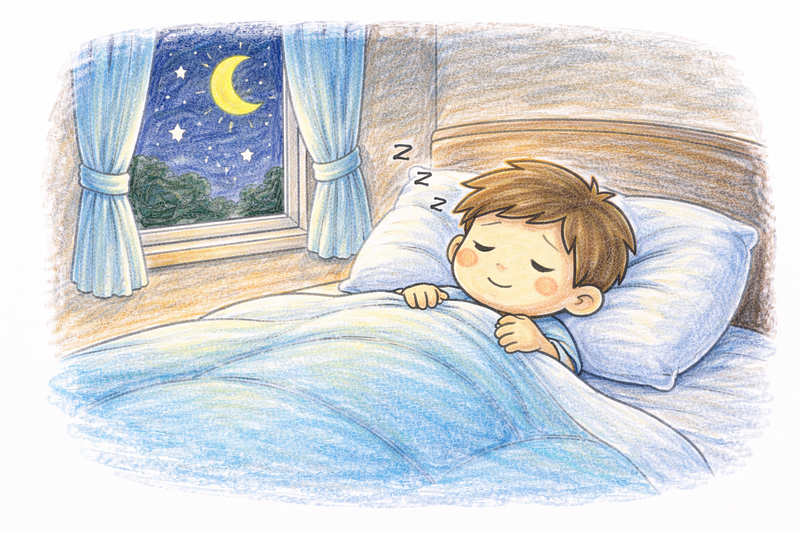
Why Sunlight Works Better Than Any Supplement
Here’s the uncomfortable truth about melatonin:
Your body already makes it perfectly.
A healthy pineal gland produces all the melatonin you need, at exactly the right time, in exactly the right dose — if you give it the right signal.
When you take melatonin supplements regularly, your brain notices extra melatonin arriving from outside. Over time it downregulates its own production. The dose that worked stops working. You need more.
It doesn’t fix the problem. It becomes the problem.
Morning sunlight works in the opposite direction. It strengthens your body’s own system. After a few weeks you need it less, not more — because your rhythm has repaired itself.
One approach makes you dependent.
The other makes you independent.
The industry prefers the first option.
Your body prefers the second.
The Protocol – Free, Forever
Wake up.
Don’t check your phone first.
Go outside within 30–60 minutes of waking.
Stay out for 10–20 minutes. Clear day — 10 minutes enough. Cloudy — go for 20. Even overcast outdoor light is 10x stronger than your brightest indoor bulb.
No sunglasses. Your eyes need direct light exposure.
Walk. Stretch. Have your chai outside. Make it something you want to do.
Do it every day. Especially weekends — that’s when most people break their rhythm and wonder why Monday feels like being hit by a bus.
That’s it.
No app. No purchase. No subscription.
The Last Thing
The sleep supplement industry will always find new things to sell you.
New forms of melatonin. Liposomal. Extended release. With ashwagandha. With magnesium. With L-theanine. With ingredients you cannot pronounce and studies you cannot verify.
Some of those things genuinely help at the margins.
But none of them repair the root.
None of them fix your circadian rhythm from the inside.
Only your biology can do that.
And your biology has exactly one request.
Ten minutes.
Every morning.
Outside.
You don’t need a better supplement.
You need a better sunrise.
If this helped you, share it with someone spending money on sleep they could be getting for free.
If this saved you a few dollars on supplements, you can buy me a coffee with that saved money 🙂
