Journaling Made Simple: How to Start, When to Write, and What to Put on the Page

Journaling Made Simple: How to Start, When to Write, and What to Put on the Page
Journaling Made Simple: How to Start, When to Write, and What to Put on the Page
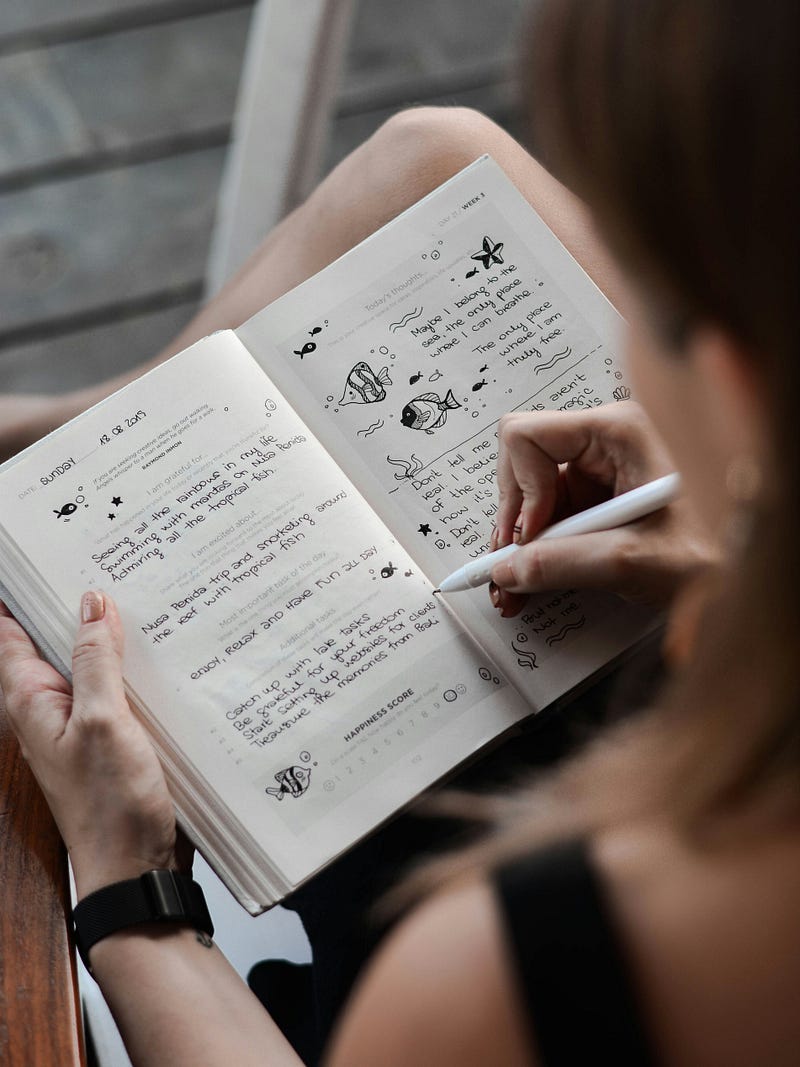
What comes to mind when you hear the word “journaling”?
Maybe you think of colorful bullet journals you see on Instagram or pictures of girls sitting surrounded by candles, writing in beautifully decorated pages inspired by famous books like Meditations(If you’re not familiar with Meditations, don’t worry), just know that journaling isn’t about all that.
At its core, journaling is simply writing.
Writing down your thoughts, your day, your activities, or whatever matters most to you.
It’s as simple as that. A personal space to capture what’s on your mind, with no fancy layouts or settings required.
Sounds simple, right? Of course, it is.
But as humans, we often don’t like simple things, so we tend to complicate them. And unfortunately, we’ve complicated journaling too.
In this article, I’ll show you how to start journaling no matter where you are in life. You don’t need fancy tools or hours of time ,you need just five minutes a day. I’ll share where to journal, when to journal, different journaling ideas you can fit into your life, and most importantly, what benefits you can expect from building this habit.
First things first—where should you journal?
Where to journal?
Obviously, you need that $50 ink pen because, you know, only fancy pens can make your genius ideas flow like a waterfall.
And don’t forget the dotted notebook! Because those perfect grids to writing or doodling within. Without these, how could you possibly unlock the true magic of journaling, right?
Well, actually, none of that matters. The key to journaling isn’t expensive pens or trendy notebooks—it’s just putting pen to paper (apologies, I’m not a fan of digital journaling). So save your cash, grab whatever’s closest, and start jotting down your thoughts—before you overthink it to death.
When to journal?
Well, it’s time to answer the second billion-dollar question: When exactly should you journal?
Is it at 3:00 a.m.? No, wait 4:29? Or maybe 4:31? Actually, scratch that, 4:30 is scientifically the golden hour to put pen to paper.
Legend has it that if you miss this magical moment, your journaling powers will mysteriously vanish into thin air. So be sure to keep your pen and notebook at the ready around that time, because who needs flexibility when you have a perfect journal time to cling to, right?
But here’s the real catch: none of those oddly specific times matter. Some people swear by journaling in the morning to plan their day and count their blessings, while others prefer quiet reflection before bed to process the day’s events. Both approaches serve different purposes. Morning journaling sets your intentions and mood for the day, while evening journaling helps you review what happened and prepare your mind for tomorrow. The key is to find a time that fits your life and stick with it—whether that’s 4:30 or whenever you can grab a moment.
The real secret isn’t about finding some magical or perfect time like 4:30 a.m.
The secret is finding your time—the moment in your day when you can consistently sit down, with no distractions, and write for five uninterrupted minutes.
Whether it’s after breakfast, during your lunch break, or just before bed, the power comes from showing up every day and making journaling part of your routine.
That quiet, focused time is when your journal truly becomes a tool for clarity, growth, and peace. Find the time that fits your life and feels comfortable—because that’s the only “perfect” time you need.
So, don’t get caught up debating whether morning journaling, night journaling, or the mystical 4:30 a.m. is the “right” time. The truth is simple: those five uninterrupted minutes, whenever you can find them, are the perfect time to connect with yourself and your thoughts. That’s the real time to journal.
So, we’ve completed the first two steps, where to write and when to write. Now, let me share with you the 10 journaling ideas that you can start using right away.
No matter where you are in life, these 10 journaling ideas, which I’m going to share with you now, will cover most of what you need to get the most out of your journaling practice. After this, I believe you won’t need any other fancy tips or tricks. These are the approaches I’ve personally followed over the past few years, and they’ve made a real difference in my life.
What to journal?
1. Daily Reflection Journal
This is the classic style of journaling where you write about your day’s events, your feelings, and any lessons or insights you gained.
It can be as short as a few sentences or as long as you like.
The goal is to process your experiences, reflect on what went well or what challenged you, and gain perspective.
For example, you might write: “Today was stressful, but I learned that taking five deep breaths helped me calm down during the meeting.”
2. Gratitude Journal
Focusing on gratitude can boost your mood and improve mental well-being. Each day, write down three to five things you’re grateful for.
They don’t have to be big; simple things like a good cup of coffee, a conversation with a friend, or a sunny afternoon count.
This practice shifts your focus from what’s missing to what’s already good in your life.
3. Goals and Intentions Journal
Use your journal to set daily, weekly, or long-term goals and intentions. Writing helps clarify what you want and keeps you accountable.
For instance, in the morning, you might write: “Today, my intention is to stay focused on my work and avoid distractions.”
Over time, you can track progress and adjust your goals.
4. Brain Dump Journal
This is my personal favourite.
Sometimes your mind feels cluttered with random thoughts, worries, and ideas.
A brain dump is simply writing down whatever is on your mind without editing or organizing.
This frees mental space and reduces anxiety.
You might write a mix of to-dos, reminders, feelings, and random insights, clearing the way for focus and calm.
5. Mood Tracker Journal
This journal focuses on your emotions.
Each day, note how you’re feeling—happy, anxious, tired—and explore what might be influencing your mood.
Over time, you can identify patterns or triggers and better understand your emotional health.
Adding details like what made you smile or upset can be very insightful.
6. Dream Journal
Dreams can reveal hidden thoughts and feelings. Keep your journal by your bedside and jot down your dreams as soon as you wake up.
Even if you remember just snippets, write them down.
Reflecting on dreams helps tap into your subconscious and can be creatively inspiring.
7. Creative Writing Journal
If you like storytelling or poetry, this type of journaling can be a fun way to express yourself.
Write poems, short stories, descriptions, or dialogues.
It doesn’t have to be perfect—just enjoy letting your imagination flow. Creative writing journals nurture creativity and can be helpful.
8. Habit Tracker Journal
Journaling about habits helps you build good ones and break bad ones. Track daily habits—like drinking water, exercising, or reading—and write reflections on what helps or hinders you.
For example: “Missed my workout today but felt more energetic after walking for 15 minutes.”
9. Prompt-Based Journaling
If you don’t know what to write, prompts can spark ideas.
Sometimes few days, these prompts help you keep going.
Some examples: “What inspires me today?”
“What scares me right now?”
“Describe your happiest memory.”
Prompts guide your writing and can push you to explore new thoughts and feelings.
10. Nature or Travel Journal
Use your journal to record details about your surroundings or travels, including sights, sounds, smells, and feelings.
I feel we often neglect to appreciate beautiful little things.
This nurtures mindfulness and appreciation of the world around you. For example: “The gentle rustling of leaves and the scent of rain made today peaceful during my walk.”
Now, here’s an important tip: You don’t need to pick just one of these 10 journaling ideas and stick to it rigidly.
The beauty of journaling is that you can mix and match different styles to fit your needs and mood on any given day.
Some days, you might want to reflect on your emotions; other days, you could focus on tracking habits or jotting down creative thoughts.
For example, if you want to track your daily water intake, you could use the habit tracker idea.
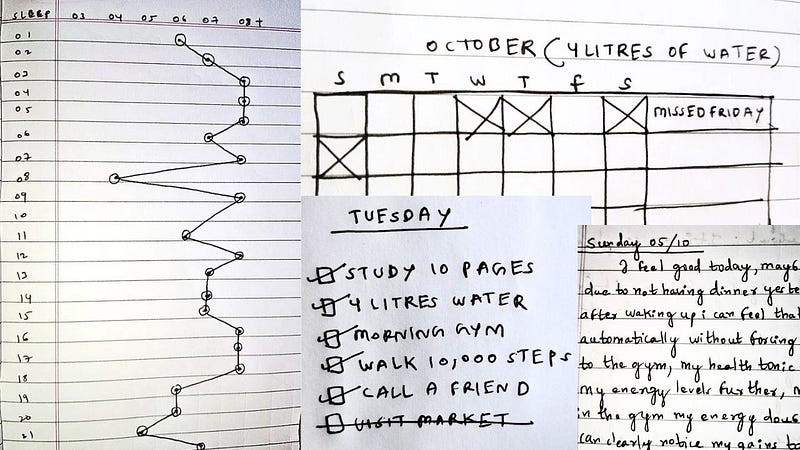
Give different ideas a try, see what resonates, and don’t be afraid to experiment!.
What to expect?
Finally, let’s talk about what you can truly expect from making journaling a habit.
Journaling is not some magical fix that will transform your life overnight—in five days or even ten.
It’s a gradual practice that builds over time.
What journaling does offer is a unique space for self-reflection, clarity, and growth.
It helps you notice patterns in your thoughts and emotions, track progress on goals, manage stress, and appreciate the small wins.
Over weeks and months, you’ll start seeing how this simple habit brings more calm, focus, and understanding into your life.
No matter where you are in life—whether you’re a student struggling with studies, a professional managing work, or someone handling everyday challenges, journaling can be a quiet, steady companion to help you navigate your journey.
So, don’t expect instant miracles. Instead, think of journaling as a small daily investment in your wellbeing that rewards you in subtle but meaningful ways.
