Why Bad People Often Succeed — And Why Good People Still Struggle

Why Bad People Often Succeed — And Why Good People Still Struggle
Why Bad People Often Succeed — And Why Good People Still Struggle
Life doesn’t always reward honesty immediately. But the real story of success is longer than we think.
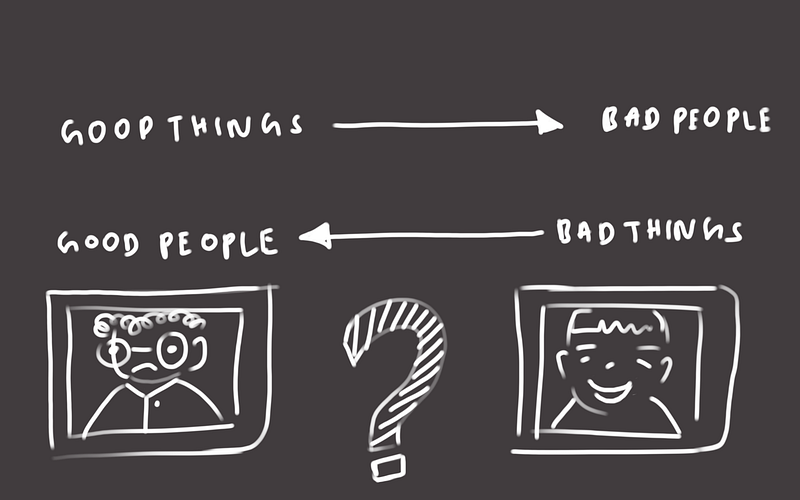
Almost everyone has asked this question at some point in their life.
Why do good people struggle while dishonest people seem to succeed?
You see someone in your workplace who pretends to be kind but manipulates situations behind the scenes. They get promoted. They gain recognition. Meanwhile, someone who works honestly and quietly gets ignored.
It feels unfair.
And after seeing this happen many times, a dangerous thought appears:
Is being a good person even worth it?
The Expectation of Fairness
From childhood, we are taught a simple rule:
Good people get rewarded.
Bad people get punished.
It appears in storybooks, school lessons, and moral teachings.
But when we enter real life, things look different.
Sometimes the person who takes shortcuts moves faster.
Sometimes the person who manipulates others gains power.
Sometimes honesty seems to lose.
At that moment, many people begin questioning everything they were taught.
The Problem With How We Define Success
When people say “bad people succeed,” they usually mean one thing:
Money.
Promotion.
Status.
Recognition.
But those are only visible forms of success.
What we often ignore is the invisible side of success — character, peace of mind, and the ability to live with your own choices.
At the end of the day, the one person you cannot escape is yourself.
You can change cities.
You can change jobs.
You can even move across the world.
But you cannot escape your own conscience.
Why Dishonest People Sometimes Move Faster
People who manipulate others often have advantages in the short term.
They take shortcuts.
They ignore consequences.
They focus only on their own benefit.
Because they remove moral limits, they can move faster in certain systems.
In workplaces, politics, or business environments that reward aggression or manipulation, these people may appear to win.
But short-term speed is not the same as long-term success.
Why Good People Sometimes Get Overlooked
Genuinely good people often focus on doing the right thing rather than promoting themselves.
They avoid conflict.
They prioritize fairness.
They care about the impact of their actions on others.
Sometimes that makes them slower in competitive environments.
But there is another reason some good people struggle:
Kindness without courage becomes weakness.
Knowing what is right is not enough.
You also need the courage to stand up for yourself and for others.
Being good does not mean being silent.
The Danger of Comparing Yourself
When people repeatedly see unfair outcomes, something begins to change inside them.
They start questioning their own values.
They think:
Maybe honesty is foolish.
Maybe I should become like them.
That is where the real damage happens.
Because the moment you abandon your values to imitate someone else’s shortcuts, you lose something much bigger than a promotion or a paycheck.
You lose your character.
Life Is Not Immediately Fair
One of the hardest truths about life is this:
Fairness does not always appear in the short term.
Some dishonest people may succeed for years before facing consequences. History is full of examples where people gained power through exploitation and manipulation.
But eventually, time changes the story.
Empires collapse.
Reputations are remembered.
And people are judged not only by what they gained, but by how they gained it.
The Real Meaning of Success
Success is often misunderstood.
Many people measure success by comparing themselves with others.
But a healthier way to think about success is simpler.
Success means becoming better than you were yesterday.
If you grow in character, wisdom, and integrity, you are succeeding — even if someone else is moving faster in the short run.
Being Good Is Not Being Naive
There is a common misunderstanding about good people.
People think being good means being soft, naive, or weak.
That is not true.
Being good means thinking about both yourself and others.
It means doing what is right even when it is difficult.
It means having the courage to act with integrity even when shortcuts exist.
Final thought
Being a good person does not guarantee an easy life.
But easy choices often lead to harder lives in the long run.
Doing the right thing may feel difficult in the moment. Sometimes it even feels unfair.
But it gives you something many people spend their entire lives searching for:
Peace with yourself.
And in the end, that kind of success cannot be taken away by anyone.
A Small Request
If this article made you pause and think, consider giving it a few claps so more readers can discover it.
Writing about these ideas takes time and reflection, and your support helps keep this work going.
If you’d like to support my writing directly, you can also buy me a coffee here:☕ Buy Me a Coffee
I also share early thoughts, unfinished ideas, and small reflections with members who enjoy thinking about life, growth, and human behavior.
Thank you for reading.
This story was published on “Pen With Paper” — a fresh space where writers bring their thoughts, stories, and ideas to life. Want to share your voice? Join our community, and together, “We Elevate Your Stories”
