Creatine Isn’t Dangerous.

Creatine Isn’t Dangerous.
Creatine Isn’t Dangerous.
It’s Just Poorly Explained.
Creatine is a very small thing.
But the reaction people have to it is rarely small.
Most people don’t feel excited when they think about taking creatine.
They feel unsure.
There’s usually a pause before the decision.
A moment of hesitation.
A quiet question that doesn’t fully form, but doesn’t go away either:
Is this actually okay?
That fear doesn’t come from nowhere.
Creatine sits in an uncomfortable place
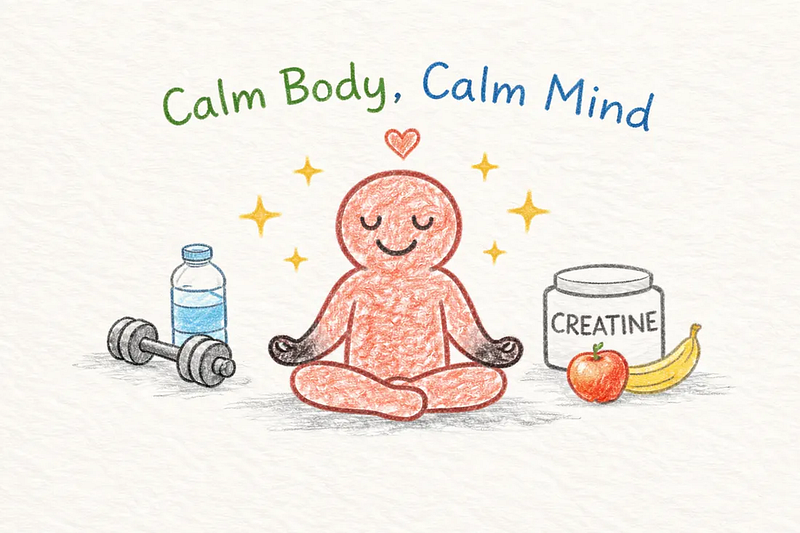
It’s not food.
It’s not medicine.
It’s not illegal.
But it’s also not something people grow up learning about.
So the brain treats it cautiously.
Over time, creatine got grouped with things that feel intense:
- bodybuilding culture
- aggressive fitness marketing
- supplement stacks
- extreme transformations
Even if someone isn’t part of that world, the association sticks.
When people hear “creatine,” they don’t picture calm biology.
They picture excess.
And when fear exists without clear understanding, the mind fills in gaps.
This is how confusion survives
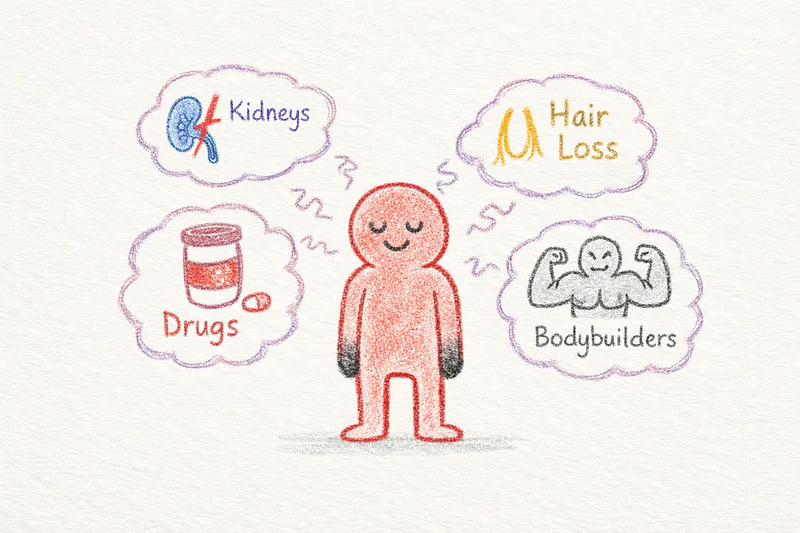
You hear claims like:
- it damages kidneys
- it causes hair loss
- it’s unnatural
- it’s only for serious lifters
Some of these sound medical.
Some sound confident.
Most are repeated without explanation.
At the same time, you see millions of people using creatine casually, year after year.
Both realities exist together.
That contradiction doesn’t create clarity.
It creates anxiety.
The real problem isn’t safety , it’s missing context
Most explanations jump straight into:
- dosage
- loading phases
- timing
- performance benefits
But they skip the part people actually need first:
What is this doing inside my body?
Until that question feels answered, fear stays.
Statistics alone don’t calm that fear.
Understanding does.
Why everyone sounds confident, but disagrees
One of the most confusing things about creatine isn’t the science.
It’s confidence.
Everyone sounds sure.
But no one seems to agree.
Some say it changed everything.
Others say they felt nothing.
Some say it’s essential.
Others say it’s pointless.
That doesn’t mean creatine is unreliable.
It means creatine is subtle.
And subtle things are explained poorly online.
Creatine doesn’t work like caffeine.
It doesn’t announce itself.
It supports a specific energy system quietly, in the background.
So experience varies.
When expectations are high, subtle effects feel disappointing.
When expectations are calm, subtle effects feel useful.
How I ended up writing about creatine at all
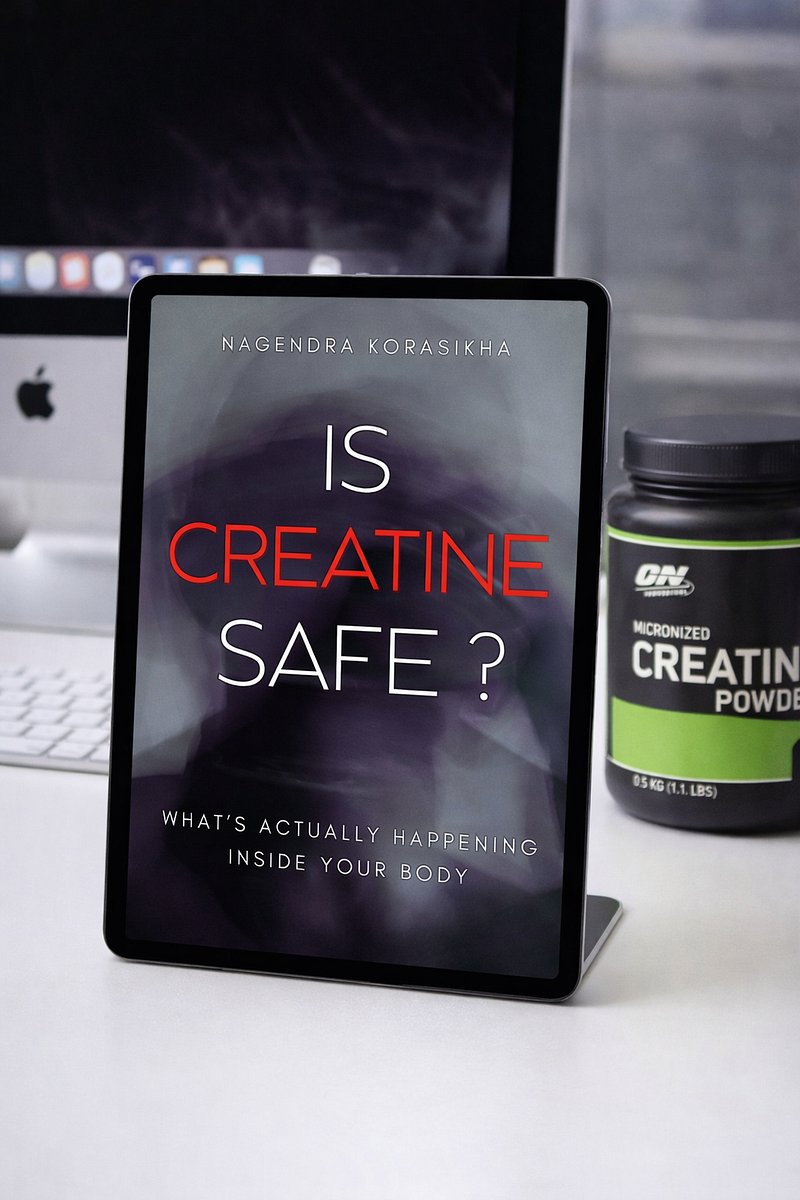
Before this became a book, it started as doubt.
I had the same questions many people do.
Should I take this?
Is it safe long-term?
What if I regret it later?
I wasn’t looking for encouragement.
I wasn’t looking for protocols.
I was looking for clarity.
So I started reading.
Then writing.
I wrote three separate articles on creatine, not because I planned a series, but because I was trying to understand it myself.
Those articles forced me to slow the questions down instead of rushing answers.
Something interesting happened after that.
People didn’t just ask “Should I take creatine?”
They asked “What is actually happening inside the body?”
That gap between fear and explanation , stayed with me.
Why those articles turned into a book
The articles helped.
But they were fragmented.
Each one answered a part of the question.
None of them held the whole picture.
So I collected the thinking.
Filled the gaps.
Removed the urgency.
The book isn’t a new idea.
It’s the same thinking, just calmer, complete, and in one place.
If you want, you can read those three earlier articles here:
What’s actually happening inside your body — shown through simple drawingsmedium.com
And if you prefer everything together, without scrolling, noise, or pressure , that’s why the book exists.
A calmer way to think about supplements
Not every supplement needs to be taken.
And not every hesitation is irrational.
Sometimes waiting is the right choice.
Sometimes understanding is enough, even if action never follows.
Creatine doesn’t need hype.
It doesn’t need convincing language.
It doesn’t need urgency.
It needs to be explained calmly.
A quiet note
I took creatine with these same doubts.
This book is simply what I wish I had read before deciding.
If it helps you feel calmer , whether you choose creatine or not, it has done its job.
No pressure.
No urgency.
Just understanding.
If this article helped you think more clearly,
feel free to share it with someone who’s confused about creatine.
You can support my writing by buying me a coffee here .
Clarity spreads better than confidence.
