The Magic of Numbers: Why 7, 12, and 108 Are More Powerful Than You Think

The Magic of Numbers: Why 7, 12, and 108 Are More Powerful Than You Think
The Magic of Numbers: Why 7, 12, and 108 Are More Powerful Than You Think
Discover the Hidden Meanings Behind the World’s Most Sacred Numbers
Think about it: why do we have 7 days in a week? Why is 12 used in clocks, months, and even zodiac signs? And why do yogis and monks chant mantras 108 times? It’s not random. These numbers have meanings that go far beyond their everyday uses.
Let me take you on a journey to uncover the secrets of these sacred numbers — 7, 12, and 108 — and how they’ve influenced ancient cultures, religions, and even modern science.
The Power of 7
The number 7 has fascinated humans for thousands of years.
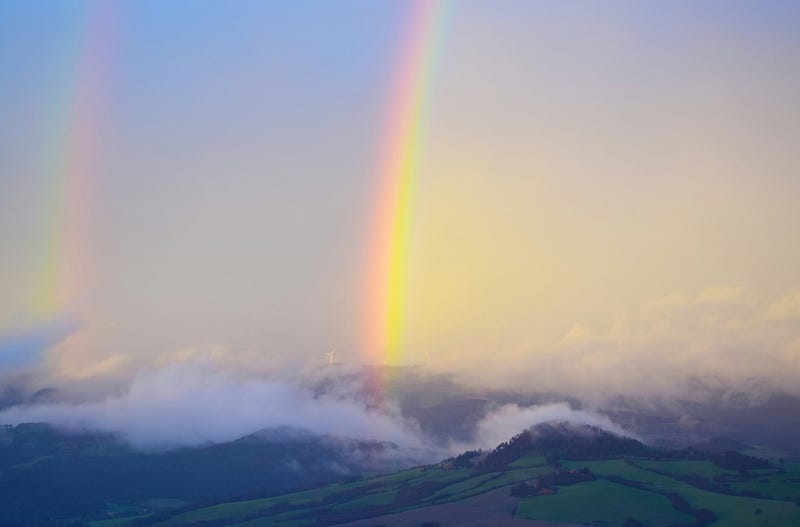
- There are 7 colors in a rainbow, 7 continents, and 7 wonders of the ancient world.
- Even our week has 7 days. But why?
In ancient Babylon, astrologers noticed 7 visible celestial bodies — the Sun, Moon, Mercury, Venus, Mars, Jupiter, and Saturn. They believed these heavenly objects governed human life. That’s why so many early cultures adopted a 7-day week.
Even today, scientists say our brains process information better in chunks of 7. Ever wondered why phone numbers are typically 7 digits? It’s easier to remember! (Source: Cowan, N. “The Magical Number 4 in Short-Term Memory.” Behavioral and Brain Sciences, 2010.)
The Completeness of 12
The number 12 symbolizes completeness and order.

- There are 12 months in a year, 12 zodiac signs, and even 12 hours on a clock.
This number’s significance dates back to the ancient Sumerians, who used a base-12 system for counting. That’s why we measure time and angles in units of 12 (think 360 degrees: 12 × 30).
In religion, 12 is everywhere. Christianity has 12 apostles, Hinduism has 12 Adityas (solar deities), and Greek mythology features 12 Olympian gods. It’s as if ancient cultures saw 12 as the perfect balance between cosmic forces and earthly life.
Fun fact: Scientists believe the number 12 aligns with cycles in nature, like the Moon’s orbit around Earth. (Source: Stephenson, F. R. “Historical Eclipses and Earth’s Rotation.” Cambridge University Press, 1997.)
The Mystical 108
If there’s one number that screams “sacred,” it’s 108. You’ll find it in yoga, Buddhism, and even mathematics. But what makes it so special?

- In Hinduism, there are 108 beads on a mala (prayer necklace). Devotees chant mantras 108 times to align with the universe.
- In Buddhism, monks meditate on 108 earthly desires to achieve enlightenment.
Here’s the mind-blowing part: 108 is not just spiritual — it’s cosmic. The average distance from the Earth to the Sun is about 108 times the Sun’s diameter. The same goes for the Moon: its distance from Earth is about 108 times its diameter. Coincidence? Or cosmic design?
Even in math, 108 is rich with symbolism. It’s divisible by so many numbers (1, 2, 3, 4, 6, 9, 12, 18, 27, 36, 54, 108), making it a symbol of wholeness.
(Source: Lemay, H. G. “Sacred Geometry: Deciphering the Code of the Universe.” Journal of Ancient Studies, 2015.)
Why These Numbers Matter Today
Sacred numbers like 7, 12, and 108 remind us that math isn’t just about numbers on a page. They connect us to ancient wisdom, natural cycles, and even the cosmos. By understanding their significance, we can find deeper meaning in the patterns around us.
So, the next time you see a rainbow, check the time, or hear a mantra, remember: numbers aren’t just numbers. They’re messages from the universe, waiting to be understood.
Do these sacred numbers make you see the world differently? Let me know in the comments, and share this with someone who loves exploring life’s mysteries! Let’s decode the universe together.
