This Book Won’t Heal You — But It Will Hold You

This Book Won’t Heal You — But It Will Hold You
This Book Won’t Heal You — But It Will Hold You
A quiet reminder that you’re not falling behind in life
There’s this idea floating around that healing has to be inspiring. That once you’ve been through something painful, you’re supposed to rise from the ashes, glow up, and show the world how strong you are.
But what about the messy parts? The days when you don’t feel like rising, when your only victory is getting out of bed? The days when you wonder why it’s taking so long, why everyone else seems to be moving forward while you’re still stuck in the same storm?
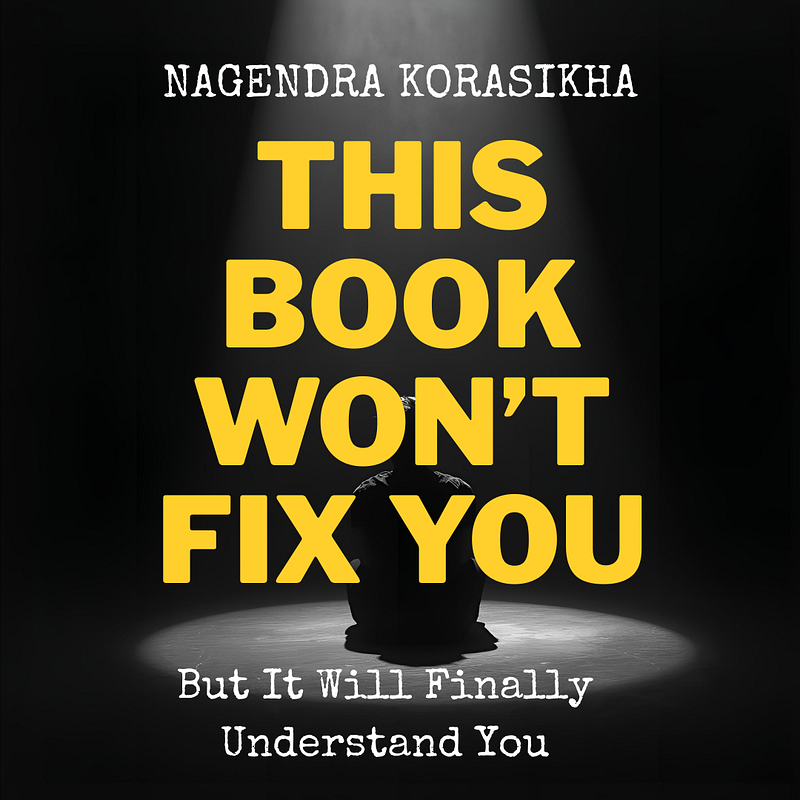
That’s the space where This Book Won’t Fix You was born.
I didn’t want to write a book that told people how to hurry up and “get over it.” I didn’t want to hand out five-step formulas for becoming a shinier version of yourself. I wanted to write something different — something that admitted healing isn’t always a glow-up. Sometimes it’s just survival. Sometimes it’s just silence. And sometimes it looks like nothing at all, but it’s happening anyway.
One of the chapters is called Healing Isn’t a Race (You Can’t Fall Behind in Becoming Yourself). That sentence alone captures so much of what the whole book is about. We live in a world obsessed with timelines and milestones. Get your career sorted by this age, get married by that age, buy a house, keep moving, keep improving. And if you’re not there yet, it feels like you’re failing.
But what if life isn’t a race at all? What if there’s no “behind” and no “ahead”? What if you’re exactly where you’re meant to be, even if it doesn’t look like anyone else’s path?
That’s the gentle reminder I kept trying to put into words: you’re not late. You’re not failing. You’re just moving differently.
Writing this book was its own kind of healing for me. I wrote in the quiet hours, when I didn’t have answers and wasn’t trying to sound wise. I wrote when I felt tired, confused, or numb. And instead of trying to turn those feelings into something motivational, I just let them sit on the page as they were. Honest. Messy. Real.
That’s why the chapters are short. Sometimes just a page, sometimes a few. They’re not lessons. They’re conversations. You can open the book anywhere, read a few lines, and hopefully feel less alone.
It’s not going to tell you how to speed up your healing. It’s not going to shame you for still feeling sad after all this time. It’s not going to measure your progress. Instead, it will sit beside you in that in-between space — the middle of your becoming — and remind you that even here, you are enough.
I’ve had readers tell me they kept the book on their nightstand and opened it on nights when they couldn’t sleep. Or on mornings when their chest felt heavy before the day even began. They didn’t need answers. They just needed someone to say, “You’re not broken for feeling this way. You’re still human. And being human is enough.”
That’s the role I hope this book plays — not as a teacher, not as a cure, but as a kind of gentle companion. Something that doesn’t push you forward but simply holds you until you’re ready to take the next step yourself.
Because maybe healing isn’t about getting somewhere fast. Maybe it’s not even about getting somewhere at all. Maybe it’s just about learning to be real. Learning to stay with yourself — even when you’re tired, even when you’re numb, even when you don’t know what’s next.
If you’ve ever felt like you’re falling behind, this book is here to remind you: you’re not. You’re still on time for your own life. And you always will be.
So no, this book won’t heal you. But it will hold you. And sometimes, that’s exactly what we need.
