This Is the Best and Cheapest Cooking Oil in the world

This Is the Best and Cheapest Cooking Oil in the world
This Is the Best and Cheapest Cooking Oil in the world
And No, It’s Not Olive Oil
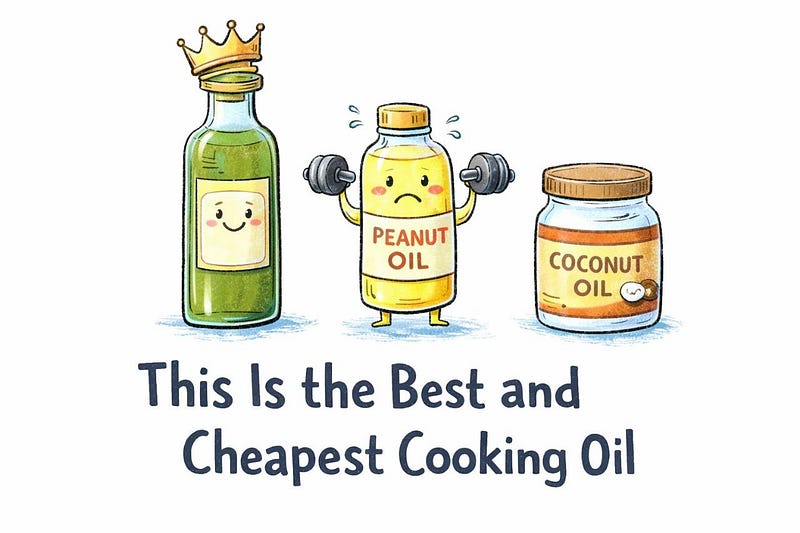
The Oil Question Nobody Asks
We argue about carbs.
We debate sugar.
We track protein.
But every single day ,without thinking ,we heat oil.
You cook your eggs in it.
You sauté vegetables in it.
You grill with it.
You fry with it.
You dip bread in it.
And if you don’t cook?
You’re still eating it.
It’s in your fries.
It’s in your chicken sandwich.
It’s in your protein bar.
It’s in your “healthy” salad dressing.
It’s in your frozen meals.
We obsess over superfoods.
But we ignore the liquid we heat to 350–400°F almost daily.
That’s strange.
Because oil doesn’t just sit there politely when heated.
It changes.

If we’re heating something to high temperatures every single day… shouldn’t we understand what happens to it?
Not in a conspiracy way.
Just in a basic common-sense way.
What Heat Actually Does to Oil (Without the Boring Chemistry Class)
Let’s keep this simple.
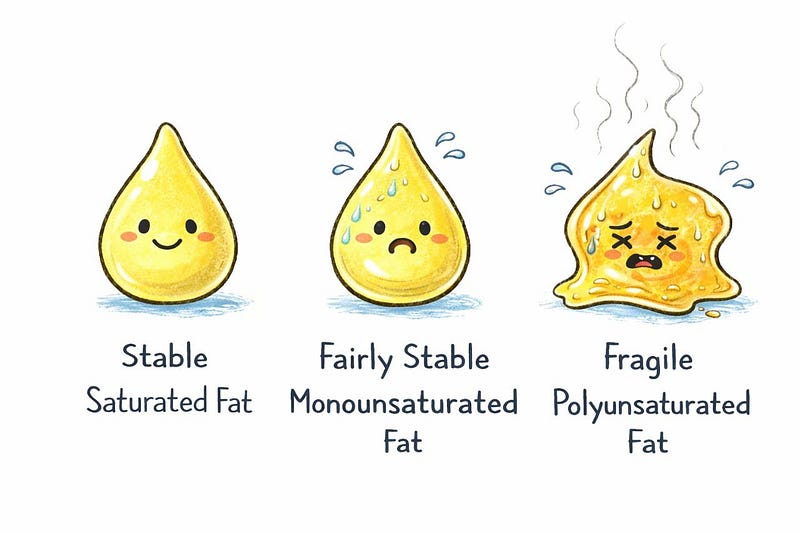
Cooking oils are mostly made of three types of fats:
- Saturated fats
- Monounsaturated fats
- Polyunsaturated fats
Think of them like personalities under pressure.
Saturated fats are stable.
They don’t panic easily.
They can handle high heat.
Monounsaturated fats are fairly stable.
They do well in moderate heat.
Polyunsaturated fats are more fragile.
Under high heat, they’re more likely to break down.
When oil breaks down under heat and oxygen, it oxidizes.
Oxidized oils can form compounds that aren’t great for the body especially when consumed regularly.
Now here’s the important part:
This isn’t about demonizing a specific oil.
It’s about understanding what happens when you heat it.
Some oils handle heat like cast iron.
Others crack under pressure.
And what really makes things worse?
Reheating oil.
That’s what happens in commercial fryers.
Oil heated for hours.
Used again.
And again.
At home, you might heat oil once.
In restaurants, it may sit hot for half a day.
That changes things.
So the real question isn’t:
“Is this oil healthy?”
The better question is:
“What happens when I cook with it?”
So Why Not Just Use Olive Oil for Everything?
Olive oil is often called the healthiest oil in the world.
It’s associated with the Mediterranean diet.
It contains antioxidants.
It’s rich in monounsaturated fats.
It has strong research behind it.
And yes, it’s a great oil.
But let’s slow down.
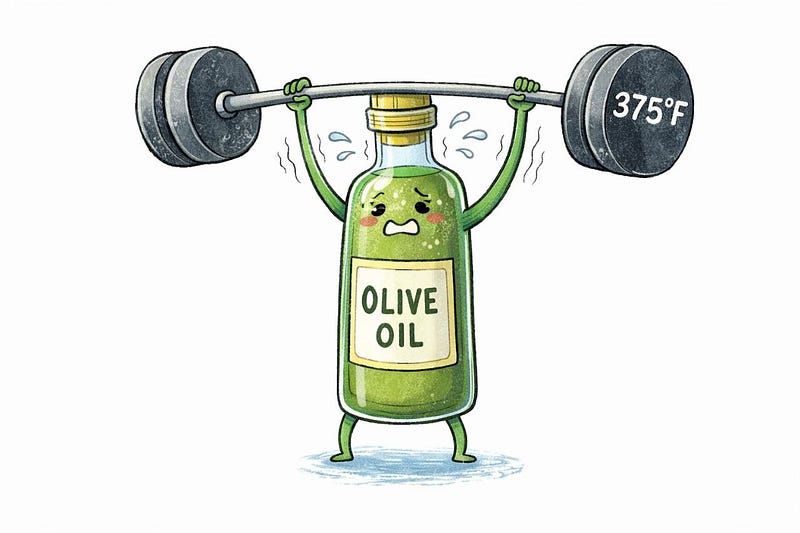
Extra virgin olive oil has a moderate smoke point.
Its beneficial compounds can degrade at high temperatures.
And it’s not cheap in the U.S. or U.K.
If you’re drizzling it over salad?
Excellent.
If you’re lightly sautéing vegetables?
Great.
If you’re deep-frying chicken at 375°F?
That’s not what it was designed for.
Olive oil is healthy.
But healthy doesn’t mean indestructible.
And this is where things get interesting.
Because most of the oil people consume every day…
Isn’t olive oil.
The Oil You’re Actually Eating (And It’s Not From Your Kitchen Bottle)

Let’s be honest.
How much oil do you personally pour into a pan each week?
Now compare that to:
Fast food
Takeout
Restaurant meals
Frozen dinners
Packaged snacks
That’s where most oil consumption happens.
Commercial kitchens often use refined seed oils like:
Canola oil
Soybean oil
Corn oil
Generic vegetable oil
Why?
They’re cheap.
They have high smoke points.
They’re neutral in flavor.
But here’s the issue:
These oils are high in polyunsaturated fats.
They’re often highly refined.
And in restaurants, they’re heated repeatedly for long periods.
Heat + oxygen + time = more oxidation.
This doesn’t mean these oils are poison.
It means context matters.
You can debate olive oil brands at home.
Meanwhile, your fries might be swimming in oil that’s been hot all afternoon.
The oil debate at home is small compared to what happens in commercial food production.
That’s the real plot twist.
The Coconut Oil Plot Twist
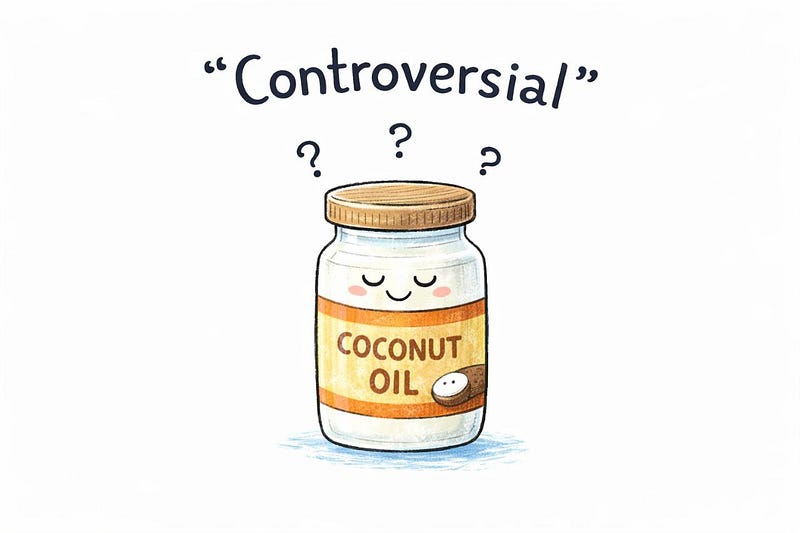
For years, coconut oil was labeled dangerous because it’s high in saturated fat.
Saturated fat raises LDL cholesterol.
That became the headline.
But coconut oil is also extremely heat stable.
It resists oxidation better than many polyunsaturated oils.
In parts of India, especially in southern regions, coconut oil has been used traditionally for generations.
Not as a trend.
Not as a biohacker trick.
Just as normal cooking fat.
And historically, those traditional diets were very different from modern Western diets filled with ultra-processed food.
This is important.
An oil doesn’t exist in isolation.
It exists inside a dietary pattern.
Coconut oil in a traditional whole-food diet is one thing.
Coconut oil added to a diet full of processed snacks and sugar is another.
The same goes for other traditional oils used in India:
Groundnut (peanut) oil
Mustard oil
Cold-pressed oils
Many of them are minimally processed and used according to cooking style.
Heat stability mattered long before people talked about smoke points on Instagram.
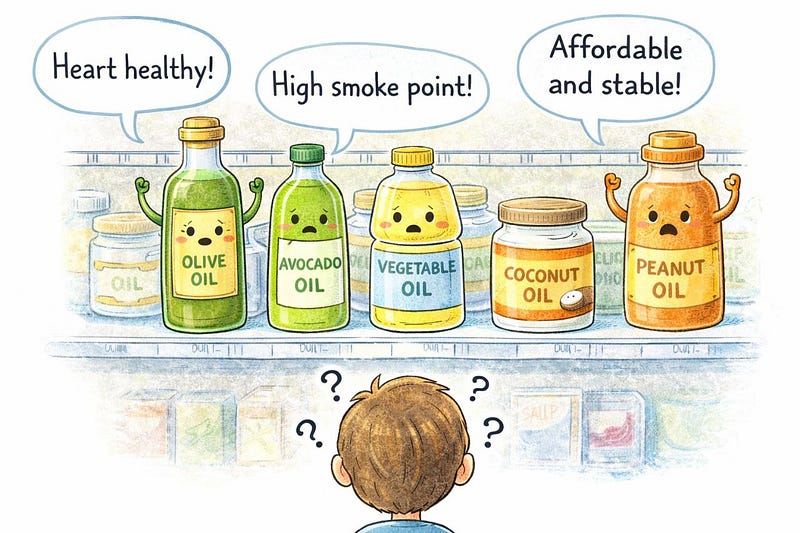
If You Walked Into a Grocery Store Today
Imagine you’re standing in Whole Foods. Or Walmart. Or Tesco.
You see:
— Olive oil.
— Avocado oil.
— Canola oil.
— Peanut oil.
— Coconut oil.
— Vegetable oil.
They all claim something.
— Heart healthy.
— Cold-pressed.
— High smoke point.
— Pure.
— Natural.
So what actually makes sense?
If you cook mostly at low to medium heat, olive oil works very well.
If you cook at high heat frequently, stability matters more.
Peanut oil is underrated.
It has a high smoke point.
It performs well.
It’s often more affordable than premium oils.
Coconut oil is highly stable.
Especially useful for high-heat cooking.
Refined oils are widely used commercially because of cost and smoke point, not necessarily because they’re optimal for long-term health when repeatedly heated.
Different oils perform differently.
But performance depends on how you cook.
The Question Was Slightly Wrong
Most people ask:
“What is the healthiest oil?”
But that question skips something important.
How do you actually eat?
How often do you cook at home?
How much of your oil intake comes from restaurants?
Are you reheating oil?
Are you deep-frying daily?
There isn’t one perfect oil for every situation.
There are better oils for specific uses.
But the biggest upgrade most people can make isn’t switching from olive oil to avocado oil.
It’s reducing ultra-processed food.
It’s not eating fryer oil five times a week.
It’s not overheating the same oil repeatedly.
The best cooking oil in the world isn’t the most expensive one.
It’s the one that:
Matches how you cook
Handles your heat
Isn’t abused
And isn’t part of a junk-food routine
Oil isn’t the villain.
But it’s not irrelevant either.
If you’re going to heat something every day…
It’s worth understanding it.
If you liked this article, don’t stop at 49 claps. Give it the full 50. Let Medium know you mean it.
If you enjoy clear, simple writing like this and want to support it, you can buy me a coffee here ☕
It helps me think, write, and overthink less.
