Unveiling the Mysteries of the Great Pyramids

Unveiling the Mysteries of the Great Pyramids
Unveiling the Mysteries of the Great Pyramids
Science, Mathematics, and Mysticism
Imagine this: it’s over 4,500 years ago, and in the golden sands of Giza, under the blazing Egyptian sun, thousands of laborers, engineers, and architects are working on a monumental project. No cranes, no modern tools — just human ingenuity and determination. The result? The Great Pyramid of Giza, the last surviving wonder of the ancient world.
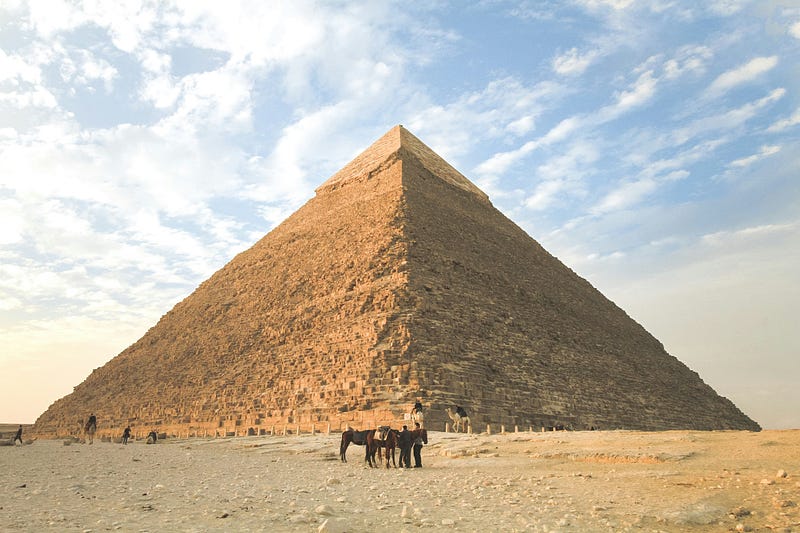
How did they do it? How could an ancient civilization build something so precise, so monumental, that it continues to baffle experts to this day? Let’s dive into the architectural brilliance, mathematical genius, and mystical allure of the Great Pyramids.
Architectural Marvels: Engineering Beyond Time
One of the most compelling mysteries of the Great Pyramid is how it was built. Each limestone block weighs an average of 2.5 tons, with some blocks reaching over 15 tons. How were these massive stones moved and placed with such precision?
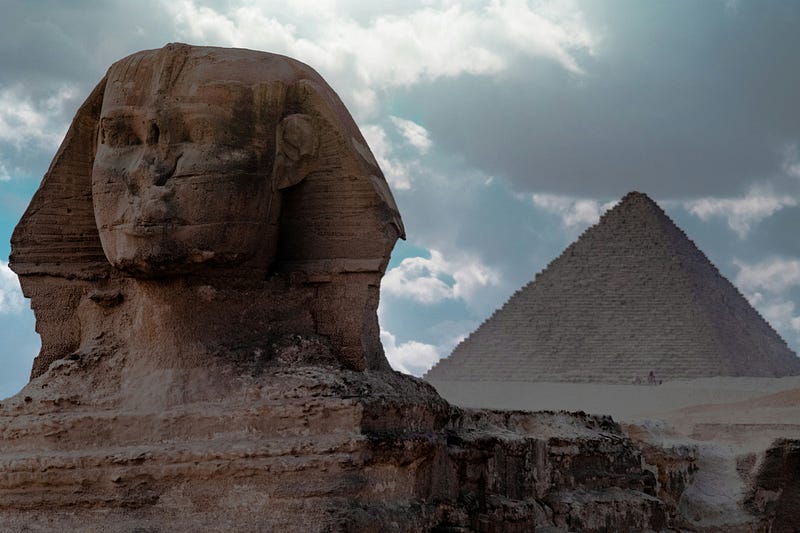
Many theories have emerged, but one of the most convincing is the Internal Ramp Theory, proposed by French architect Jean-Pierre Houdin. He suggests that the pyramid was constructed using a spiraling internal ramp hidden within its structure. This ingenious design would allow workers to haul massive blocks up the pyramid without external scaffolding. What’s fascinating? 3D simulations and scans have revealed anomalies in the pyramid’s structure, which might support this theory. (Source: Jean-Pierre Houdin, “The Internal Ramp Hypothesis”)
Another groundbreaking discovery came from geological studies of the Nile River. Researchers believe that during the pyramid’s construction, a now-dry branch of the Nile flowed closer to the site. This would have allowed materials to be transported by boat right to the construction site, significantly reducing the effort of moving the stones across the desert. (Source: Science Advances)
Mathematical Precision: Was It Just Coincidence?
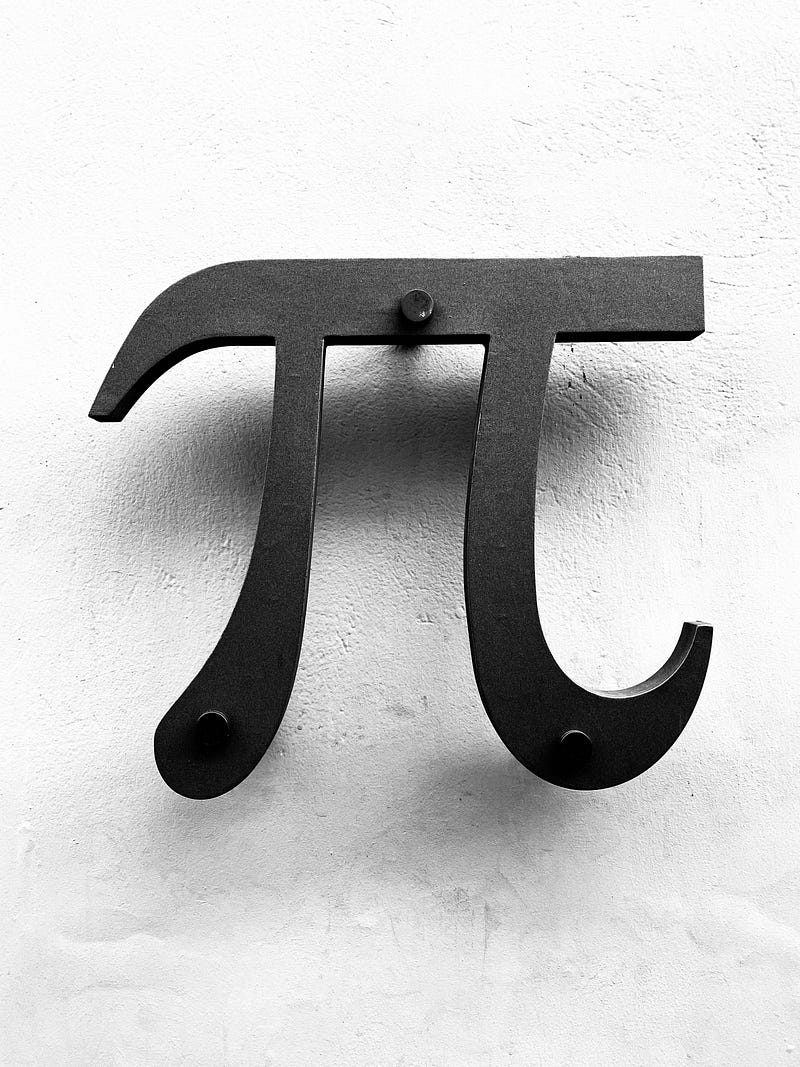
The Great Pyramid isn’t just an architectural masterpiece; it’s a mathematical one too. Did you know that the pyramid’s dimensions encode the value of pi? If you divide the pyramid’s perimeter by its height, you get a close approximation of 3.14. Coincidence? Perhaps. Or maybe the ancient Egyptians had a deeper understanding of mathematics than we give them credit for.
Some scholars also believe the pyramid incorporates the golden ratio, often associated with divine beauty and harmony. This ratio appears in nature, from the spirals of galaxies to the proportions of the human body. Could the pyramid’s architects have intentionally aligned it with this universal principle? (Source: “The Mathematics of the Great Pyramid” — Nexus Journal)
And it doesn’t stop there. The pyramid is aligned almost perfectly with the cardinal directions (north, south, east, and west). Modern GPS measurements reveal an alignment error of less than 1/15th of a degree. How did they achieve this level of precision without modern tools? Was it advanced astronomy, or something more mystical? (Source: National Geographic)
Mystical Theories: A Portal to the Cosmos?
Beyond the science and mathematics lies the pyramid’s mystical allure. Some researchers believe that the Great Pyramid wasn’t just a tomb but a power plant of sorts, harnessing cosmic energy. This idea, though controversial, stems from the pyramid’s unique internal structure and its placement on Earth. The pyramid lies at the intersection of Earth’s longest line of latitude and longitude, leading some to speculate that it was built as a harmonic center of the planet.
Others suggest the pyramid served as a repository of ancient wisdom — a library of knowledge encoded in stone. This theory connects the Great Pyramid to the fabled lost civilization of Atlantis, which some believe passed down advanced knowledge to the ancient Egyptians.
And then there’s the theory of extraterrestrial intervention. Could the precise engineering and mathematical genius behind the pyramids be evidence of help from beyond Earth? While this theory often finds itself in the realm of conspiracy, it highlights just how otherworldly the pyramids feel to us even today.
What Do We Truly Know?
Despite decades of research, the Great Pyramids remain an enigma. Each new discovery adds another layer to the puzzle, sparking more questions than answers. Were they merely tombs, or were they something far greater — cosmic symbols, mathematical wonders, or perhaps even messages from an ancient world far more advanced than we imagine?
One thing is certain: the Great Pyramids were more than just structures — they were a testament to human ambition and the mysteries of the universe. As we continue to study them, they remind us of one timeless truth: some mysteries are meant to inspire awe, not just answers.
Want to explore more?
Dive into these fascinating studies:
- The Internal Ramp Theory by Jean-Pierre Houdin
- The Role of the Nile River in Pyramid Construction
- Mathematics of the Great Pyramid
What do you think? Could we ever truly understand the Great Pyramids, or will they forever guard their secrets? Share your thoughts in the comments below. Let’s unravel this mystery together!
