Creatine Is Not Just for Gym Bros . Here’s What It Actually Does to Your Brain

Creatine Is Not Just for Gym Bros . Here’s What It Actually Does to Your Brain
Creatine Is Not Just for Gym Bros . Here’s What It Actually Does to Your Brain
The supplement sitting in every gym bag might be the most underrated thing for your mind.
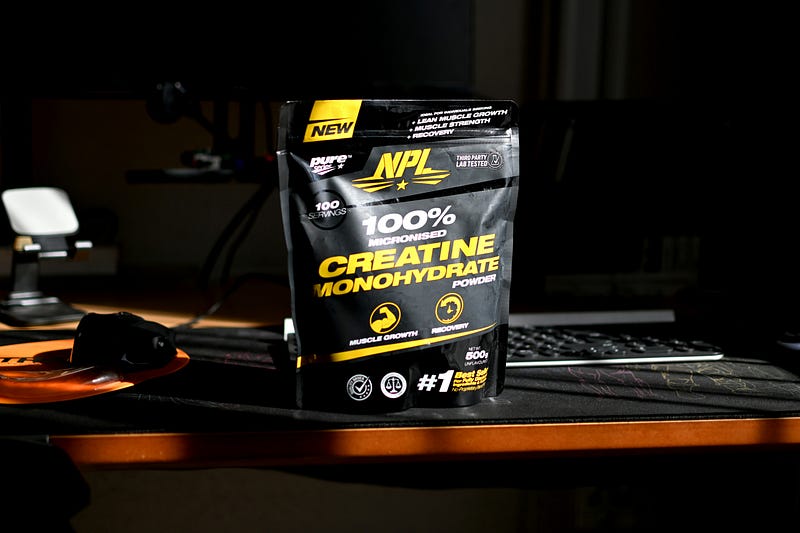
Most people hear the word creatine and picture the same thing.
A big guy at the gym. A shaker bottle. Muscle. Weight. Protein. Bulk.
It is one of the most successful accidental reputations in nutrition history. Creatine got adopted by the fitness world so completely, so visibly, that everyone else quietly assumed it had nothing to offer them.
That assumption is wrong.
And the science proving it wrong has been building for years while almost nobody outside research labs was paying attention.
The Thing Nobody Told You About Creatine
Here is what creatine actually is.
Not a steroid. Not a stimulant. Not something the body treats as foreign or suspicious.
Creatine is a compound the body already makes naturally. Your liver produces it every single day. Your muscles store it. Your organs use it. It is not something being introduced from outside , it is something already running in the background of every cell in your body.
The supplement version simply gives the body more of what it already knows how to use.
Your body is not confused by creatine. It has been using it your entire life.
Where the Brain Comes In
Here is the part the gym industry never talked about.
The brain is one of the most energy-hungry organs in the human body. It makes up roughly 2 percent of your body weight and uses roughly 20 percent of your total energy.
All of that energy has to come from somewhere. And the system the brain uses to produce and store energy is the exact same system creatine supports.
Every time a brain cell needs energy quickly — to fire a signal, to form a thought, to hold information in working memory — it reaches for something called ATP. The body’s energy currency. The molecule that powers almost everything.
Creatine’s job is to help regenerate ATP faster.
More creatine available means energy gets replenished quicker. Brain cells get what they need without delay.
The brain runs on energy. Creatine helps keep the energy supply steady.
What the Research Actually Found
Scientists started studying creatine and the brain seriously about two decades ago.
What they found kept appearing across different studies, different populations, different conditions.
Supplementing with creatine consistently improved performance on tasks requiring short term memory and quick thinking. People processed information faster. They made fewer errors under mental pressure. Their brains recovered quicker after demanding cognitive work.
One study gave participants a series of mentally exhausting tasks and measured performance with and without creatine supplementation. The creatine group maintained significantly better performance as the tasks continued.
Another study tested older adults specifically. The results showed measurable improvements in memory , the kind of memory decline people assume is simply an unavoidable part of aging.
The brain, given more creatine to work with, simply performed better.
The Sleep Deprivation Finding
This one is worth sitting with.
Researchers wanted to understand what creatine does to cognitive performance when the brain is running on low fuel. Specifically , after a bad night of sleep.
Sleep deprivation is one of the most reliable ways to impair brain function. Decision making slows. Memory weakens. Reaction time drops. The brain runs on an increasingly depleted energy supply and everything it does suffers.
What the study found was striking.
People who had supplemented with creatine performed significantly better on cognitive tasks after sleep deprivation than those who hadn’t. The gap in performance between rested and sleep-deprived was noticeably smaller in the creatine group.
The brain, with more energy reserves available, handled the deficit better.
This does not mean creatine replaces sleep.
But it does mean that when the brain is running low, having more creatine available makes a real measurable difference.
The People Who Need It Most
Here is something the research consistently shows that almost nobody talks about.
The people who benefit most from creatine supplementation are not the people already eating diets rich in it.
They are the people eating the least of it.
Creatine is found almost exclusively in animal products. Meat. Fish. Poultry. The body absorbs it directly from these foods and uses it immediately.
People who eat little or no meat — vegetarians, vegans, people in lower income situations where meat is a rare luxury — have significantly lower baseline creatine levels in the body and the brain.
Which means their brains are already running with less of the energy support creatine provides.
Studies on vegetarians supplementing with creatine show some of the most dramatic cognitive improvements in the research — not because creatine is working harder for them, but because they were starting from a larger deficit.
The people who could benefit most from this supplement are often the ones least likely to know it exists for them.
What About Mental Health
The research here is newer. Smaller studies. Less certainty.
But it is consistent enough to be worth mentioning.
Several studies have looked at creatine in the context of depression — specifically treatment-resistant depression, the kind that does not respond well to standard medication.
The thinking behind it is connected to energy. Depression is associated with disrupted energy metabolism in the brain. Certain brain regions show reduced ATP production in people with depression. If creatine helps restore energy availability in those regions, it might support recovery in ways that other interventions don’t reach.
Early results are cautiously interesting. Some studies show creatine supplementation alongside standard treatment improving outcomes faster than treatment alone.
This is not a claim that creatine treats depression.
It is an observation that the brain’s energy systems matter for mental health — and creatine directly supports those systems.
Why This Stayed Hidden So Long
This is the part worth thinking about.
Creatine’s cognitive benefits were not hidden because the research was weak. The research has been building steadily for twenty years.
They were hidden because of branding.
The moment creatine became associated with bodybuilding in the 1990s, it acquired an identity that made it invisible to everyone outside that world. Doctors didn’t recommend it for brain health. Researchers who studied it were mostly exercise scientists. The general public filed it away under gym supplements and moved on.
Meanwhile the brain benefits quietly accumulated in research journals that most people never read.
The science was there. The story told about it just pointed in a completely different direction.
The Simplest Summary
Creatine helps the brain produce energy faster.
A brain with better energy availability thinks more clearly, holds information longer, handles stress better, and recovers quicker from mental exhaustion.
It costs almost nothing. It is one of the most studied supplements in existence with an exceptional safety record across decades of research. The body already knows exactly what to do with it.
And for almost thirty years it sat in gym bags while the people who needed it most — people under mental stress, people with poor diets, people losing cognitive sharpness with age — had no idea it was an option.
The most studied supplement in the world was hiding in plain sight. It just had the wrong reputation.
A Quiet Thought
The brain is the most expensive organ you own.
It consumes more energy than anything else in your body. It runs every thought, every decision, every memory, every version of yourself you have ever presented to the world.
And for most people, its energy supply is something they have never once thought about.
Creatine does not make you smarter. It does not replace sleep, good food, or genuine rest.
But it supports the energy system the brain depends on. And a brain running on a full energy supply simply works better than one running on less.
That is not a gym benefit. That is a human benefit.
If you spent years ignoring creatine because you thought it wasn’t for you — you were not wrong to question it. You were just working with an incomplete picture.
Before you go…………
Most people take creatine without really understanding it.
I used to be one of them.
That curiosity led me down a deeper rabbit hole and eventually into writing a simple guide that explains what actually matters (and what doesn’t).
If this article helped, that guide might help even more.
And if you enjoy thinking about fitness a little differently, you might like my membership where I share more ideas like this.
