Tears Aren’t Proof of Pain. They’re Proof of Overflow.

Tears Aren’t Proof of Pain. They’re Proof of Overflow.
Tears Aren’t Proof of Pain. They’re Proof of Overflow.
We cry not because something hurts, but because it exceeds what we can hold.
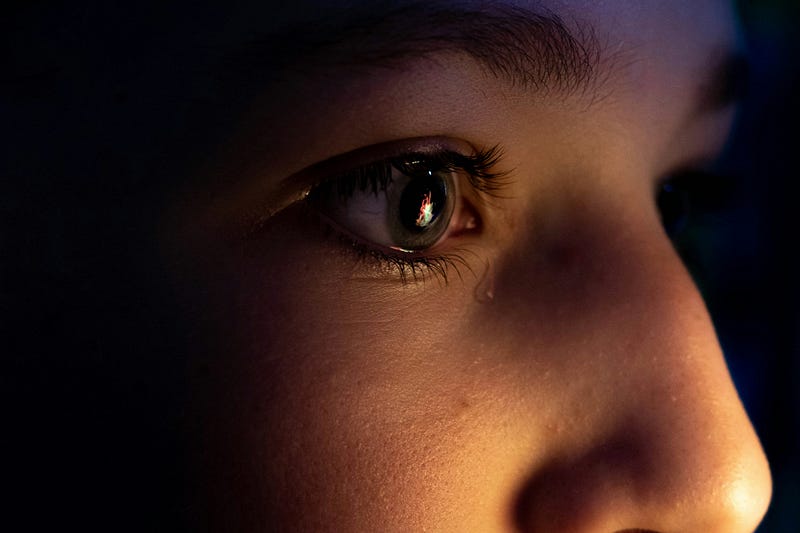
The first time most of us learned about tears, we learned the wrong lesson.
We were told:
You cry when you’re hurt.
You cry when you’re weak.
You cry when something goes wrong.
So we grew up believing tears are evidence of pain.
But if you pay closer attention to your own life, that explanation starts to feel incomplete.
Because some of the most painful moments don’t bring tears at all.
And some of the moments that do bring tears aren’t painful in the traditional sense.
That’s where the real story begins.
Tears Don’t Come From Pain. They Come From Excess.
Pain alone doesn’t make us cry.
If it did, we’d cry every time life was hard.
Every stressful day.
Every quiet disappointment.
But we don’t.
We cry when emotion crosses a threshold — when it exceeds what the nervous system can carry silently.
Tears are not a reaction to pain.
They’re a release when feeling outgrows containment.
As the poet Khalil Gibran wrote:
“Tears are the summer showers to the soul.”
Not damage.
Drainage.
Why We Cry More Easily From Sadness Than Joy
People often ask:
“If tears come from emotional overload, why don’t we cry from joy more often?”
The answer is uncomfortable but simple.
Most of us are deeply practiced at sadness.
We are not practiced at joy.
Sadness has space in our lives:
- heartbreak
- grief
- disappointment
- exhaustion
We let those emotions accumulate.
Joy, on the other hand, is often interrupted.
We downplay it.
We move past it quickly.
We dilute it with practicality.
“How long will this last?”
“What’s the catch?”
“Don’t get too excited.”
So joy rarely gets the chance to overflow.
When it does — weddings, reunions, unexpected kindness — people do cry.
Not because joy hurts.
But because it arrives unfiltered.
The Body Cries When the Mind Can’t Process Fast Enough
Think about moments when you cried unexpectedly.
Not the obvious ones — the quiet ones.
- When someone showed you compassion you didn’t ask for
- When you felt understood after a long time
- When something ended and you didn’t realize how heavy it had been
Those tears weren’t planned.
They happened because the mind couldn’t explain fast enough what the body was feeling.
So the body did what it knows how to do:
It released.
Neuroscientists suggest emotional tears help regulate stress hormones and rebalance the nervous system.
In other words, crying is not a failure of control.
It’s the body restoring it.
Why We Feel Ashamed of Crying
Somewhere along the way, we learned to apologize for tears.
“I’m sorry, I didn’t mean to cry.”
“I don’t know why I’m crying.”
“This is stupid.”
We treat tears like a social malfunction.
But that shame doesn’t come from biology.
It comes from performance.
We live in a world that rewards:
- composure
- productivity
- emotional efficiency
Tears slow everything down.
They demand pause.
They make things real.
And that makes people uncomfortable , especially when they don’t know how to sit with emotion themselves.
Tears Are Often the Healthiest Thing in the Room
There’s a quiet honesty in tears.
They arrive when words fail.
They bypass ego.
They ignore logic.
That’s why they’re hard to fake.
And why they’re so human.
As Carl Jung once said:
“I am not what happened to me, I am what I choose to become.”
Sometimes, tears are part of that becoming.
They mark the moment something inside you reorganizes.
Not breaks.
Reorganizes.
Some Emotions Don’t Get Tears, And That’s Okay
Not crying doesn’t mean you didn’t feel deeply.
Some emotions settle instead of overflow.
Some pain goes quiet.
Some joy becomes warm instead of loud.
Tears are not a measure of depth.
They’re just one of many expressions.
The mistake is assuming they only belong to suffering.
A Gentler Way to See Tears
What if we stopped asking:
“Why am I crying?”
And started asking:
“What just became too much to carry alone?”
That question carries compassion instead of judgment.
Because tears don’t mean something is wrong with you.
They mean something mattered.
Ending
Tears aren’t proof that you’re weak.
They’re proof that you felt fully.
They don’t come from pain alone.
they come from the moment emotion exceeds the limits of silence.
And in a world that teaches us to numb, suppress, and perform,
tears might be one of the last honest things we still do without thinking.
If this piece resonated with you,
or made you see your own tears a little differently.
You can buy me a coffee here
Feel free to leave a comment.
I read them quietly, like most meaningful things.
And if you want more calm, reflective writing like this,
you know where the clap button is 🙂
This story published on “Pen With Paper” — a fresh space where writers bring their thoughts, stories, and ideas to life. Want to share your voice? Join our community, and together, “We Elevate Your Stories”
